Most Vastu literature was written with independent houses in mind — full control over
direction, layout, and construction. But the reality for most families today,
especially in fast-growing areas around Navi Mumbai, Panvel, and Uran, is apartment
living: a unit within a larger building, with a layout you didn't design and mostly
can't change. So how does Vastu apply here?
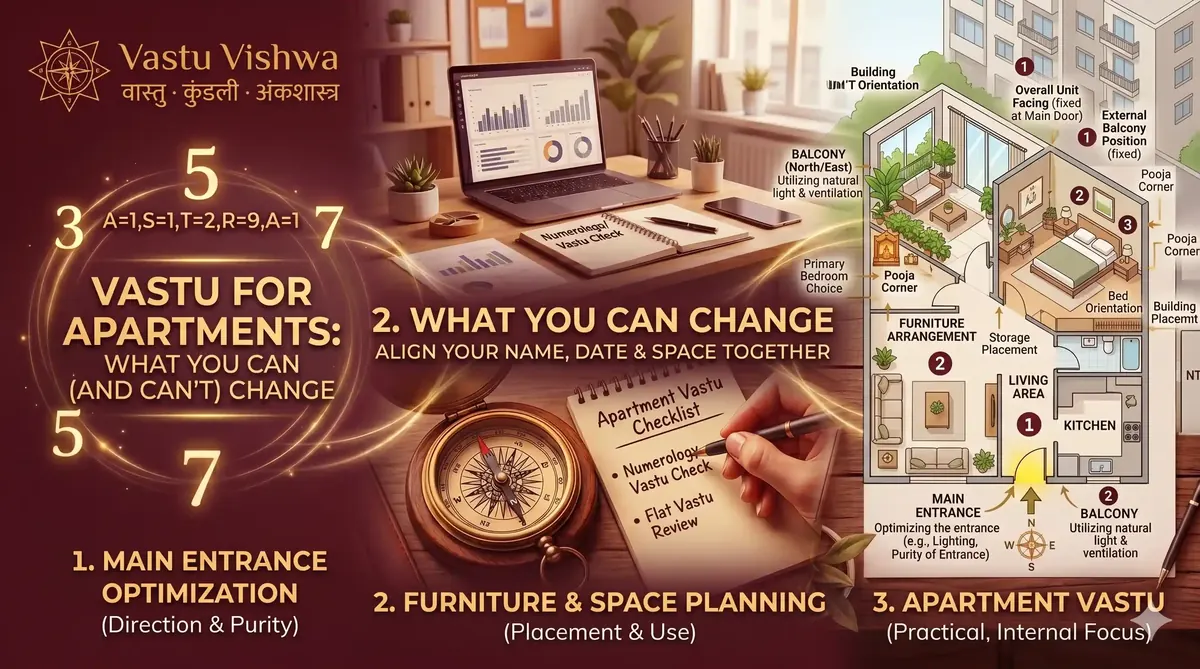
The building vs. the unit
It's worth separating two things: the building's overall position and facing (which
you have no control over as a buyer or tenant), and your specific unit's internal
layout and how you use it (which you have significant control over). A Vastu
consultation for an apartment focuses heavily on the second part — because that's where
real, actionable change is possible.
What matters most in an apartment
- Your unit's main door direction — even within a large building,
your front door has its own orientation, and this is assessed the same way as a house's
main entrance.
- Internal room layout — where your kitchen, bedrooms, and
living areas fall relative to each other and to the unit's entrance matters regardless
of the building's overall facing.
- Balcony and window placement — these become more important in
apartments, since they're often the primary source of natural light and ventilation
for each room.
- Furniture arrangement — in smaller spaces, furniture placement has
an outsized effect on how a layout "feels," and is one of the easiest things to adjust.
Common apartment-specific concerns
A few things come up often in apartment consultations:
- Toilets above/below kitchens or pooja spaces — in multi-storey
buildings, what's directly above or below a room (in the unit above or below yours) is
sometimes considered, though this is treated as a minor factor compared to your own
unit's layout.
- Shared walls and irregular shapes — apartments are often L-shaped
or have walls shared with neighbouring units, which can create rooms that don't map
neatly onto traditional direction-based guidance. This is where a personalised
assessment — rather than generic rules — becomes valuable.
- Limited entrance options — unlike an independent house, you can't
relocate your front door. The focus shifts to what can be done with the entrance you
have: lighting, cleanliness, what's placed near it, and the immediate area just inside.
What you genuinely can change
Despite the constraints, apartments offer plenty of room for meaningful adjustments:
- Which room is used for what (e.g., choosing which bedroom is the primary one based
on direction)
- Furniture placement, especially beds, work desks, and the pooja corner
- Colour schemes for different rooms
- Where mirrors, storage, and specific items are positioned
- How the balcony or windows are used (plants, seating, what's stored there)
New flat vs. existing flat
If you're choosing between multiple flats — common when buying in newer developments
across Navi Mumbai and Panvel — a Vastu review of the floor plans before
purchase can help you pick the unit that needs the fewest adjustments later. If you're
already living in a flat, the focus shifts to working with what exists.
Either way, an online consultation works well for apartments — share the floor plan
(even from the builder's brochure) along with photos of each room, and a detailed,
practical assessment can be prepared without needing a site visit.
Have questions about this topic?
Book a free 15-minute consultation with Prachiti to discuss your specific situation.
Book Free Consultation